Bringing Indigenous heritage home
In museums and universities across the UK, Indigenous ancestral remains and cultural belongings remain far from home. The Homebound Project works to change that, funding their return to the communities and lands where they belong.
Scroll to learn more

Our mission
The Homebound Project is dedicated to restoring dignity, sovereignty, and cultural integrity to Indigenous communities worldwide by funding the material repatriation of ancestral remains and cultural belongings from UK institutions to their rightful communities.
Indigenous objects in the UK
Far from home
Across the United Kingdom, hundreds of thousands of Indigenous belongings and ancestors are retained in museum and university collections. Because stolen cultural objects and human remains are not well documented, it is difficult to give exact numbers. However, the following statistics give a general idea of how big the problem is:
200000
Cultural objects from the Pacific are held in the UK
The British Museum holds 40,000 items from the Pacific alone.
13600
Items from Tasmania are held by the Pitt Rivers Museum in Oxford
This does not include the vast collection of belongings from the rest of Australia held by the museum.
1700
Ancestral remains from around the world are held by the University of Edinburgh’s Anatomical Museum
Universities and institutions across the UK have similar statistics, meaning that at least tens of thousands of Indigenous ancestors are being kept from returning to their descendants and homelands to rest.
Importance of repatriation
Why repatriation matters

1. Restoring Respect

2. Healing Historical Injustice

3. Honoring Sovereignty

4. Strengthening Cultural Continuity

5. Achieving Ethical Practices
Repatriation Process
The repatriation process in the UK
Unlike other colonial countries, the United Kingdom has no laws in place to mandate the repatriation process for Indigenous heritage. Instead, each institution determines for themselves what the path to repatriation will include for the objects in their collections. Some institutions are more open to repatriation than others; these positions on repatriation are reflected in the processes Indigenous items have to go through in order to be returned home.
Navigating these varying and complex processes is not easy, but there are people and organizations who work hard to make repatriation possible. These include members of Indigenous nations, museum employees, and non-profit organizations.
If an object successfully makes it through these processes, it is cleared to return home. However, UK institutions very rarely fund this journey, and the financial burden is placed on the Indigenous community to whom the object belongs. Often, due to centuries of violence and oppression, Indigenous communities lack the funds to pay for repatriation.
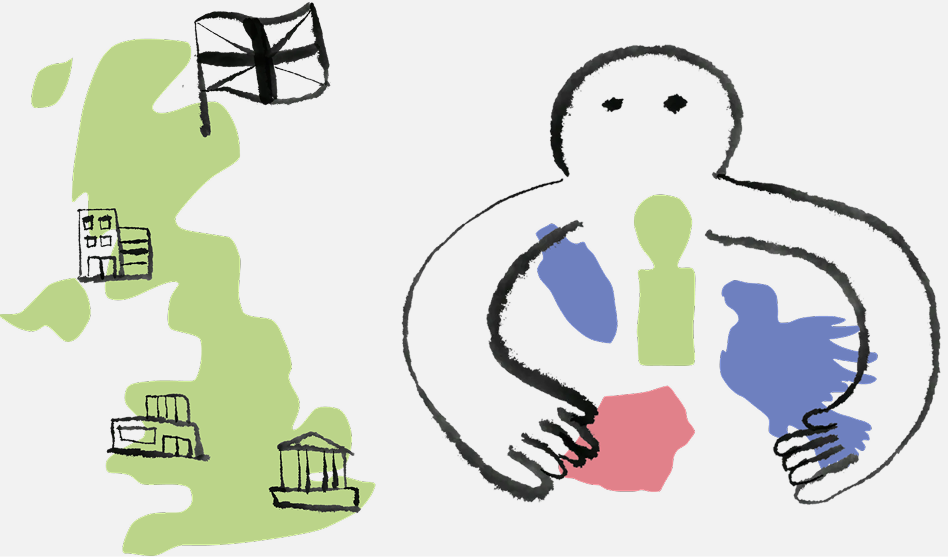
The Homebound Project exists to fund these journeys home
Are you from an Indigenous Nation seeking funding for a repatriation from the UK?
Do you want to learn more about repatriation?